
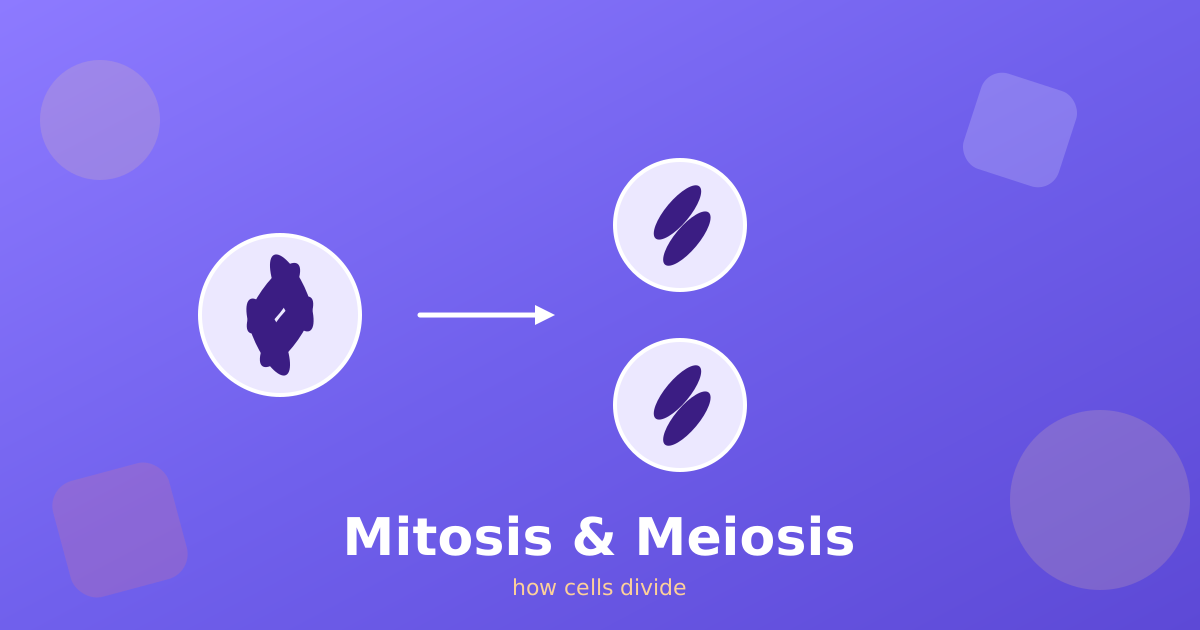
Every cell in your body — your skin cells, your liver cells, your bone-marrow cells — came from a single fertilized egg. The way that one cell became roughly 37 trillion cells, all with the same DNA but doing wildly different jobs, is one of the deeper achievements of evolution. The mechanism at the heart of it is cell division, and it actually comes in two completely different forms: mitosis and meiosis. They do different things, and confusing them is one of the most common mistakes in introductory biology.
This article walks through both — what they are, why they exist, and where you can see them happening in your own body right now.
Why Cells Divide At All
There are three reasons a cell would divide:
- Growth. A baby grows into an adult by cells dividing trillions of times.
- Repair. When you cut yourself, the skin cells around the wound divide to fill the gap.
- Reproduction. Single-celled organisms reproduce by dividing. Multicellular organisms like us use a specialized form of division to produce eggs and sperm.
The first two reasons (growth and repair) use mitosis. The third (reproducing the species) uses meiosis. They look superficially similar and use a lot of the same machinery, but the outcomes are completely different.
Mitosis: One Cell Becomes Two Identical Cells
The job of mitosis is simple to state and incredibly hard to execute: take one cell, copy all of its DNA, and split it into two cells that each have exactly the same complete genome as the parent.
The cell goes through several phases:
- Interphase — the cell isn't dividing yet, but it's getting ready. It duplicates all its DNA so there are now two complete copies of every chromosome.
- Prophase — the duplicated chromosomes condense into tightly coiled X-shapes (each "X" is two identical sister chromatids joined at the middle). The nuclear membrane breaks down.
- Metaphase — the chromosomes line up along the middle of the cell. The spindle — a structure made of microtubules — attaches to each chromosome.
- Anaphase — the spindle pulls the sister chromatids apart, dragging one copy of each chromosome to each end of the cell.
- Telophase — new nuclear membranes form around each set of chromosomes.
- Cytokinesis — the cell membrane pinches inward and splits the cell into two.
Result: two genetically identical daughter cells, each with the same chromosome count as the parent (46 chromosomes in humans, organized as 23 pairs).
This is happening in your body constantly. Your skin replaces itself roughly every month. The lining of your gut turns over every few days. Your bone marrow churns out billions of new blood cells every day. All mitosis.
Meiosis: One Cell Becomes Four Cells with Half the DNA
Meiosis is what makes sexual reproduction possible. Its job is to take a normal cell (with two copies of each chromosome — one from your mother, one from your father) and produce sex cells (eggs and sperm) with just one copy of each chromosome.
Why? Because when an egg and sperm fuse at fertilization, the result has to end up with the normal two copies. If both parents contributed full sets, every generation would double the chromosome count — which would obviously be catastrophic.
Meiosis runs the cell-division process twice in a row:
- Meiosis I — the cell duplicates its DNA (like in mitosis), then pairs up the maternal and paternal copies of each chromosome and pulls them apart. At this point a critical thing happens: crossing over, where pairs of chromosomes swap pieces with each other. This shuffles parental genes in new combinations. The cell then divides, with each daughter cell getting one full set of chromosomes (but still in duplicated form — sister chromatids still joined).
- Meiosis II — the duplicated chromosomes split apart and the cell divides again.
Result: four genetically unique cells, each with half the normal chromosome count (23 in humans, instead of the usual 46).
The "genetically unique" part is the whole point. Crossing over in Meiosis I plus the random combination of maternal and paternal chromosomes means no two eggs or sperm from the same person are ever identical. That's the foundation of why siblings are different from each other.
The Big Picture
Both kinds of cell division are downstream of one bigger story: how DNA — the molecule covered in Top 10 Fascinating Facts About Human DNA — gets copied and passed on. Mitosis preserves it faithfully so that every cell in your body has the same instructions. Meiosis shuffles it so that every generation produces new combinations for natural selection to work on.
In other words: mitosis keeps you alive. Meiosis keeps the species going.
For where this all fits in the broader picture of biological organization, see From Cells to Superorganisms: Levels of Biological Organization. For the broader story of how genetic variation drives evolutionary change, see The Evolution of Life.
When Cell Division Goes Wrong
Most of the time, cell division works exactly as designed. When it doesn't, two important things can happen.
- Cancer. Cancer is, at its core, cell division gone wrong — cells that have lost the normal controls and divide when they shouldn't, where they shouldn't. Many cancer drugs work by interfering with the machinery of mitosis specifically.
- Chromosomal abnormalities. When meiosis miscounts and an egg or sperm ends up with too many or too few chromosomes, the resulting offspring can have conditions like Down syndrome (an extra copy of chromosome 21). Most chromosomal mistakes are incompatible with development at all.
The fact that something this complex works reliably as often as it does is one of the small daily miracles of being alive.
Quick Comparison
| Mitosis | Meiosis | |
|---|---|---|
| Purpose | Growth and repair | Producing eggs and sperm |
| Number of divisions | 1 | 2 |
| Daughter cells produced | 2 | 4 |
| Daughter cells identical to parent? | Yes | No |
| Chromosome count in daughters | Same as parent | Half of parent |
| Genetic variation introduced? | None (normally) | Lots (crossing over + random assortment) |
| Where it happens | Almost every body cell | Only in reproductive organs |
Mitosis is for keeping you alive. Meiosis is for handing the genetic baton to the next generation. Two completely different jobs, run by the same underlying machinery with one critical extra step.